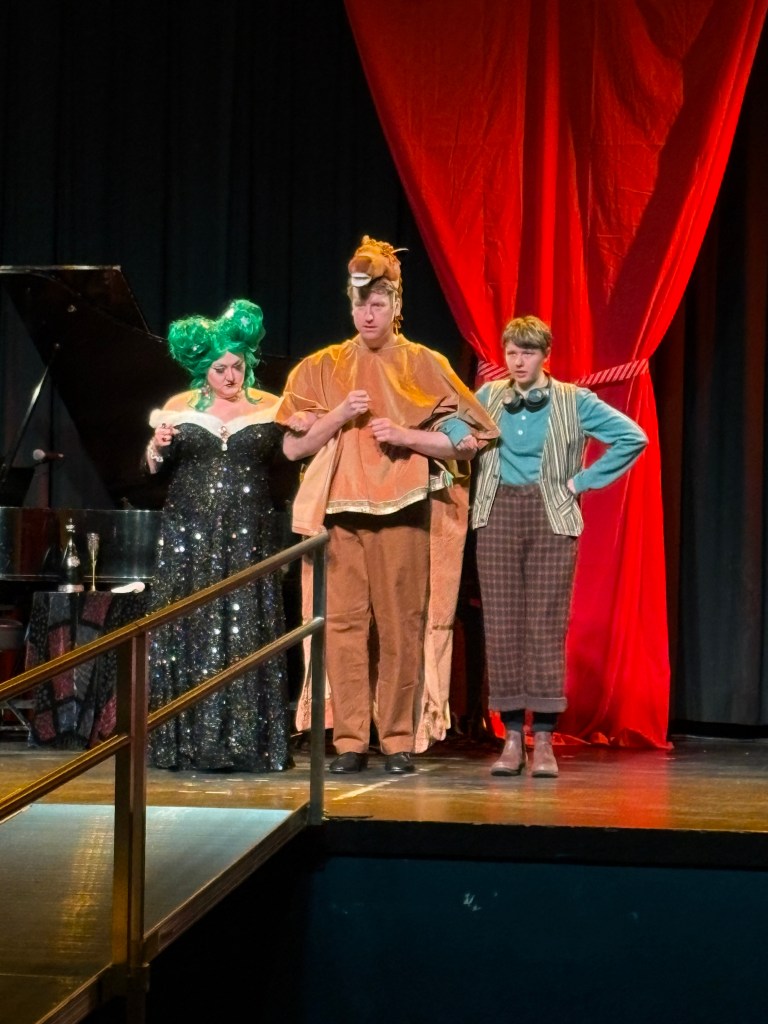
Today was media call for Sick and Twisted theatre’s Merry Crip-Mas Panto at the WECC. The amazing thing about doing theatre criticism is that you can actually go to an event like this and ask questions – because that is what you are supposed to do. With that in mind, the lovely folks at the show were generous enough to share their time and perspectives. Which was more than enough to discover that what they are doing is special in a way that goes far beyond the show they are producing.
Which you should still check out. It looks like it will be funny and out there and amazing. Reviews to come.
What is really remarkable about Sick and Twisted is the way they go about producing shows. According to their own mandate, they make art that “celebrates the vibrancy and impact of inclusive theatre performance”. Inclusive theatre performance in part means using a cast who live with disabilities of some variety. In the conventional narratives that we’re told about disability, that would be the end of the story. I can just see the well meaning commentators saying “Look! Isn’t it so inspirational for people with disabilities to make art?” As though the point was the disability, and any attention given to them an act of charity. That kind of thinking is patronizing, reductive, and (I can not stress this enough) not what this theatre troupe does.
So why does this marginal position matter?
Because these are people who do quality, edgy and interesting work. Who aren’t always able to do it because of accommodation issues.
And if, like me, you were blown away by the caliber of performances Sick and Twisted offers… maybe like me you end up also feeling mad at all the systematic issues that get in the way of seeing these actors on stage more often? Because I’m furious. I’m reminded of Metachroma Theatre in Montreal, whose production of Richard III I reviewed back in 2012. This was a company of actors of colour who wanted to put on shows where their skin colour didn’t impact the roles they got to play. It remains possibly the best Shakespearean play I’ve ever seen. Inclusion isn’t important just because it’s the human thing to do; it also makes for better art.
It also shapes the way the work gets made in a meaningful way. Founder and Artistic Director Debbie Patterson described how they spend time as a company establishing everybody’s accessibility needs before rehearsals even start. Every single person I spoke to made a point of mentioning how supported this made them feel. In my experience, that’s something quite rare to find in any workplace, but especially in the arts where there is all too often the attitude that when you love your work you shouldn’t be distracted by such trivial matters as health, support or even just simple accommodations as needing to eat and pay rent regularly.
Due to being in a supportive environment that is accommodating, the cast can just focus on putting on a subversive show. That subversive edge is also informed from the minority perspective.
“Living with disability, whether it is mobility or chronic pain, or mental or physical, and all of us in this show are living with disability,” says Theresa Thomson, “there’s a darkness that comes with that, and there’s inherently a choice where you can choose to laugh, or you can let the darkness take you. “
Tomorrow I will be reviewing a play, something I’ve done dozens of times in the past. Today I am in awe of the camaraderie and healthy working habits of a group – and that respect will be there regardless of what I think of it.
They have also inspired me to approach this blog in an accessible way. I am also someone who lives with disabilities, and these have often interfered with my ability to do things in a hundred ways, both big and small. At this point I’m starting a theatre blog with confidence that I can do the work required, but there have been many points where that wasn’t possible. Things might come up in the future.
Inspired by Sick and Twisted theatre, I am going to promise to deliver this blog as often and as well as human resources allow. I would love to do extra articles. I want to have bilingual written content. That might not always happen. At the same time, not doing this project because it might not be perfect makes no sense. There is a place for multiple voices.
Now for the show!

 Curtains Up Winnipeg
Leave a comment