Carrie – Jessy Ardern†
Paul – Daniel Bogart
Rudy / Jim / Garry / Officer Miller – Toby Hughes
Alice – Jennifer Lyon
Rachel / Ms. Watson / Nurse / Officer Lafleur – Jane Testar
The tagline of this show could almost be “it should have been so simple”. Parents Carrie and Paul just want to take care of their two kids, one of whom, Daniel, happens to have cerebral palsy. Beyond that they work, pick up groceries and squabble. And yet in some achingly painfully realistic first scenes, the audience is brought into the fact that their lives are full of stress levels and logistical disaster paradigms every time they try to accomplish some basic task to help their child with special needs. Of course the clinicians and medical bureaucrats Carrie and Paul have to go through are very sympathetic to how hard it must be raising a child with a disability, conveniently managing to ignore that it is the all too real world of Mandatory Bureaucracy for Everything that is actually the source of their stress. Actually, it’s worth mentioning that at no point do either parent attribute their difficulties to their child’s medical condition. It’s suggested that it’s not because it isn’t a factor, but rather because it absolutely pales in comparison to the challenges of accessing the services. They have needs that other families don’t have, which is supposed to be balanced out through systems that give them additional supports. And yet. Insert the dry laughter.
This show took on a big topic and turned into a fast-paced chaotic zinger of an adventure. If you have ever had to deal with medical bureaucracy I would say that the first twenty minutes are almost too real and brutally honest. These initial scenes are some of the best writing in the show, with their concise analysis of splitting hairs and ridiculous expectations placed on families. Kudos to Tobias Hughes for delivering the doctor’s lines with the friendly smirk of someone who truly believes that they are being helpful. If you have never been at the mercy of medical bureaucracy, the initial segment is a beautiful insight into the experience of repeated frustration that wears people down. The overall theme of systems taking away human dignity is all too relatable. Also, there is some fabulous examples by the establishment of what my friend calls “kale smoothie and yoga” your problems away – or in this case, offer trite visualisations and trite metaphors instead of offering meaningful help.
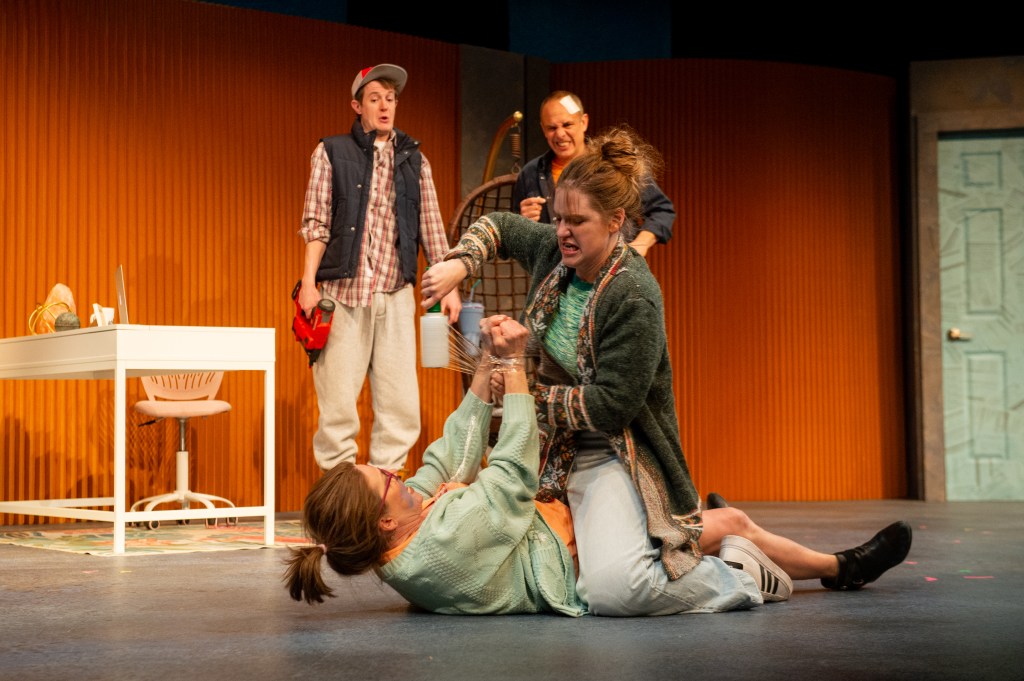
Dealing with bureaucracy is often very much like trying to box with jello. You hit it hard with logic and it just goes ahead and suffocates you further. Except in this particular case, Carrie decides to take some concrete action in very unexpected ways. Is it realistic? No. That was never the point. Instead, it gives the audience a feeling of power and catharsis. In this show, the characters get to push back and make things happen. There is a radical purpose served by imagining an alternative ending to what often happens, and that is what this piece gives us. Beyond that I’m getting into spoiler territory.
I would give this piece one of my ultimate compliments, which is that it is well crafted. Every element works well together. The actors are generous in how they interact with each other. The pacing of this show is stellar. The script is tight. It is high up there in the list of favourite shows I’ve seen since starting this blog. I particularly loved the parental support group online played by Jane Testar and Tobias Hughes. The two dash between personas for much needed comedic relief, but also anchor the story in important ways. Jesse Ardern is the heart of the story, a protagonist who consistently goes haywire without ever giving up her relatability and loveable quality.
Partly because this show handles such a big topic, it’s inevitable that it also raises questions that are worth examining. For example, how does it shape the story that the character with a disability is never shown on stage, situating the able bodied parents at its centre? It’s possible that including disabled actors might be equally problematic if they are presented as objects of spectacle, but I did spend a lot of time thinking over various alternatives.
I’m also uncomfortable with the way blame is situated for systemic inaction. To be clear, Alice their worker is clearly an awful person and I enjoyed the catharsis of someone in an unequal unjust system get their comeuppance. That said, even within the world of the play, nothing that happens to her is going to change the fundamental problems of inadequate resources. It also seemed like there was a grain of truth in the worker’s criticism that the white nuclear family was privileged – which was not in any way to dismiss the severity of their challenges. I wondered why Daniel the disabled child had to be consistely refered to as “such a good kid”, as though he would have been less worthy if presented as human and fallible. I was just left wondering what would happen if other elements were brought in as well – ethnicity, welfare, language, immigration, disabled parents for example.
None of that takes away from how much I liked the show. It’s great that I walked out with questions about representation and individualism. I wondered what the next show about disability will look like, and how they will engage with those big questions. And I wondered about how you can bring progressive values into a mainstream theatre that still has to appeal to a broad base. I do appreciate that community plays a key role in the resolution.
So to sum it up, great play, but I would love to discuss the issues that came up for me with anyone who goes to see the show.
 Curtains Up Winnipeg
Leave a comment