By Daniela Smith-Fernandez
Firsts are important: first words, first names, first steps. They matter, not so much in and of themselves, but because they mark an initiation. They bring with them the traces of what is to come: a life full of conversations, years of identity, paths walked into strange and unimaginable places. All firsts matter.
That includes our relationship with what we love – people, places, and things. What we allow to impact our hearts and imaginations are the things that determine the direction our lives will go on to take. We have meet-cute origin stories with our partners and friends, so I would argue that we should also treasure those stories about how we were introduced to more intangible loves. Your favourite kind of food. The bar that makes you feel like home. Or maybe, in my case, theatre. Love doesn’t have to be all encompassing to matter. I have many loves: art mediums, people, stories, friends… but theatre has been an abiding one. I’m interested to look at how that first happened, and look at what it says to other people who want to induct their children into the world of the arts.
Although you do run the risk of creating artists. I’m sorry about that. In my defence, it kind of happens no matter what society tries to do.
I’ll take you back a… few… years to my grandparents’ basement. I was six years old and was fairly convinced that this place of books was actually magic. Besides, there were all of these leather bound tomes with old lettering and as far as I knew that made it proper magical material. The books I gravitated to hopelessly was a collection of green cloth bound volumes. I could tell that they were a series because my grandpa had taught me how to read roman numerals to help put books back in order after I pulled them off the shelves. My attraction was sensual: I liked the woodcut illustrations and the whisper of tissue thin pages. I was enchanted. I could barely read, but I knew I was in love.
As it just so happened, the books that had me so captivated were a collection of the works of William Shakespeare. My grandfather understood this to mean that I had fallen under the spell of the Bard, a most appropriate subject for an intellectual anglophile like himself. I have never been very good at accepting when things are too hard for me, so I went ahead and borrowed a book. My grandfather was never overly concerned with giving reading material over my age range, so he didn’t blink at the idea his six year old granddaughter wanted to read Elizabethan theatre. If it was important to my grandfather that I know and love Shakespeare clearly this was now my priority. I had a mission
I don’t remember how far I got with reading Shakespeare. However, what I do remember very well is that this experience happened around the time that MTC was putting on A Midsummer Night’s Dream and my new interest inspired my grandfather to take me. That is how I ended up sitting in the audience of MTC at my very first grown up play, a bawdy comedy about people screwing around in the woods. I don’t know that I appreciated iambic pentameter in any significant way. I can promise you that absolutely all of the double entendres went way, way over my head, including the stuffed unicorn Hermia held on to when Lysander wanted to snuggle up close. I got lost in the story pretty quickly, although my grandpa did his best to help me along.
That night is when I fell in love with theatre..
It wasn’t because of the “timeless universal appeal of Shakespeare” TM. I actually have some pretty strong opinions about the ethnocentrism inherent in calling anything universal. I wasn’t in love with Shakespeare, I was in love with the experience.
Imagine if you will that you are a child, someone who is constantly told that you can’t do things until you are older. Someone who sees the adults in your life doing things you don’t understand but you know that they care about it. There is a sense of powerlessness in childhood, of frustrated yearning for a future that will actually arrive way too soon in the scheme of things. But you, as the child, don’t know that.
Now imagine that one of your favourite adults invites you to come into their secret grown up world with them. They give you suggestions how to dress. They have conversations with you ahead of time about what to expect. Maybe they even remind you that this special event is going to happen really soon one day when they are over making you and your sister macaroni and cheese for lunch.
Then when they pick you up, they tell you about the magical ceremonial rituals of the Theatre. You must never talk once the curtain comes up. Clap when other people clap to show the actors that you appreciate their work. We will exit the world of the story once in a special time called “intermission”. This is when you can get a drink, or, if you are very lucky, an ice cream. We are quiet during the performance. Some wriggling is acceptable as long as you don’t stand up or disturb the people next to you. Once we sit down we NEVER get up. This is how you find your seat, see the numbers and letters? It’s a special code to locate you in the theatre. See these hard candies? You unwrap them in loud parts. Listen closely.
Wait for the curtain to rise.
I have an obsession with red theatre curtains which dates back to that night. I loved what they represented, a story that was about to come. I loved the sounds of the performance starting, and the whisper of curtains across the stage. I wanted to touch and look at everything in front of me, and also not get too close so as not to ruin the allure. My dream that night was probably to sew fairy wings for the theatre. (I was six) What was this strange new world in front of me? I couldn’t answer it, but I knew I was having big feelings that went beyond my ability to dissect the erotic gender play in Shakespeare’s plays. I mean, my interest in that theme would come eventually.
When I think about where my love of theatre comes from, it has very little to do with the actual play and everything to do with the ceremony that surrounded it. For me, what mattered was that my grandpa had trusted me enough to introduce me to something he considered important. He loved Shakespeare, so he believed that I was capable of loving him too. It was that simple. That was the trust he gave to a young child, to believe that she was able to understand and appreciate something important to him.
He showed me love by teaching me to belong in the audience. He showed me respect by believing that I was capable of learning the protocols. Before I learned that theatre mattered, I learned that I was worthy of being trusted with important knowledge. That is heady stuff to a young child who is more likely to be shown Sesame Street than Shakespeare.
The thing is, this whole introducing a child to the things you love doesn’t always work the way you want it to. My grandfather was obsessed with classical music and went out of his way to attend as many concerts as possible. Three of my cousins are professional classical musicians and I occasionally put on ballet music when I’m writing and need something without words. Not every love you have will catch in every child.
What matters is how you treat them, like they are special and full of possibilities. You never know which loves will resonant with which child, or why. What matters is that you take the time to induct them into something that you care about. Teach them that they are worthy of sharing what you love.
For me, theatre, literature and art are the passions that stuck with me. Being introduced to these things left me feeling loved and cherished. When I listen to people talk about sports, or camping, or any number of other things… I hear the same echos of being inducted into something that mattered to the adults in their lives. And that’s really beautiful.
Today was my grandfather’s birthday. If he was still around today I have no doubt he’d still be a fervent patron of the arts with subscriptions to all the theatre and concerts and operas and so on. My grandmother still is, and she’s 96. So many times when I produce art I wish he was here to see it. Maybe not the French language play about the guy with the magic penis… but the rest of it. I wish that he could know what all of his love and respect for that child I used to be meant to me, meant to the artist I later became. I think he understood on some level that it wasn’t enough for me to witness art, I needed to make it. I did decide I wanted to be a writer when I was eight, after all. I still want people in the arts to understand how important a role is played by people like my grandpa, and my grandma, who take on the work of fostering a future audience for the arts. Without them, the audiences would be much less rich.
I think about him a lot, especially when I go to MTYP with my niece to review plays. She had lots of exposure to theatre before me, but I try to make her feel like her opinion is important and valuable. Because it is. I want her to love theatre, but even more than that I want her to feel loved and respected and trusted with important things.
That feeling of magic he gave me has followed me throughout my life. I still get tingles before every performance starts. I prepare for shows by reading everything possible that’s available. And after all these many years, I still read my theatre programs cover to cover and go through every acting credit and director’s note as though they contained the formula for curing the common cold.
In his memory, I want to encourage anyone reading this to trust children with what they love. It doesn’t have to be theatre. Actually, it doesn’t even have to be your children. Just do that important work of taking time to show someone that they are loved, and that art is for them.
I miss my grandpa everyday. That said, I think that the most fitting tribute I could make to him is to share what I love with other people.
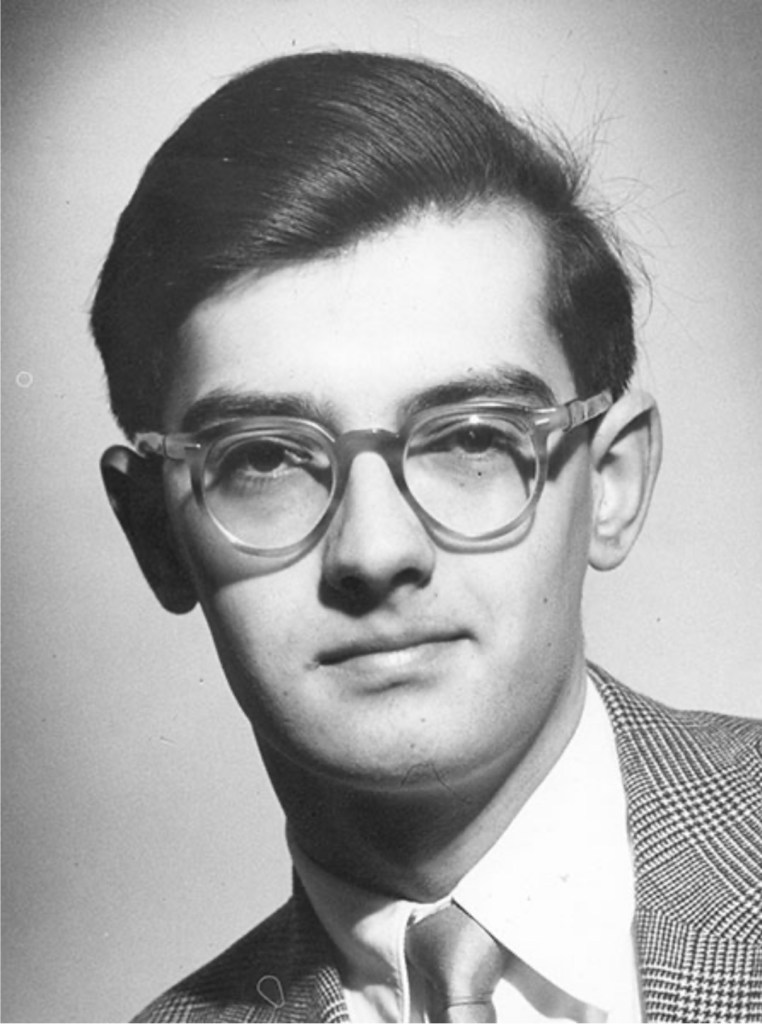
To Murray Rhodes Smith. You are still missed.
Daniela Smith-Fernandez is Chilean-Canadian by birth, francophone by choice. She is an artist, writer and craftsperson who is proudly multicultural and multilingual (English, Spanish, French). She has worked in theatre as a costumer, prop maker, venue manager and volunteer. Her theatre reviews and articles have been published in student newspapers and blog. She is currently writing the second play in a trilogy about a pansexual man who is obsessed with sex and French grammar, not always in that order. She writes in English and French.


Leave a Reply