By Daniela Smith-Fernandez
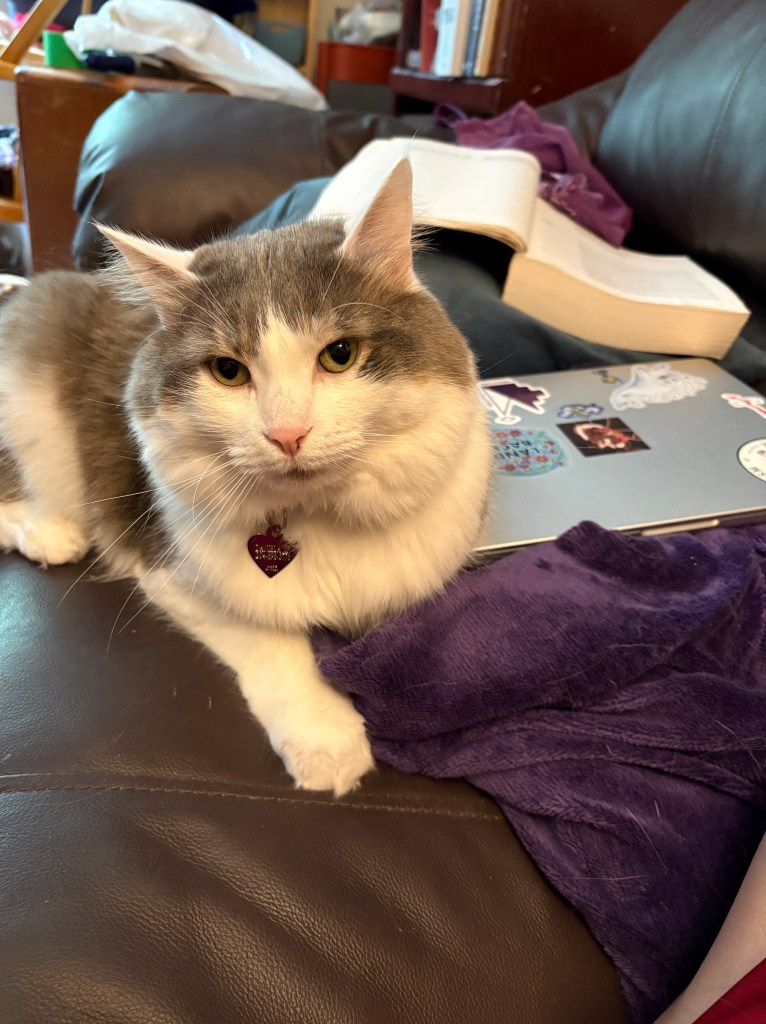
Don Diego de la Luna sat next to me yesterday as I read the Bedford Introduction to Drama. I haven’t gotten to the fun part yet – we’re still coughing through the introduction in which the author defines terms and explains concepts of performance. Diego let me give him scritches as I ran through these introductory concepts of cast and speaker, not completely riveted. Which is strange, because when I was an eighteen year old poring over this text. I definitely was. It’s not like I don’t appreciate writing about theatre. It just wasn’t exciting this time around – maybe because I know more this time around?
I am fascinated by introductory textbooks – by introductions in general. It fascinates me what people consider to be essential information – the overarching narrative that needs to be told. History is a great example of this – what people think are the key events worth knowing tells you a lot about what they believe is important, and with it the story that is being told. Even people who are conscious of questions of inclusion and representation get strangely conservative when it comes to picking key elements. I find this compelling. If we are ever going to have diversity, we need to make changes in the material we consider to be essential, such as which plays make it in to the Bedford Introduction to Drama that first year theatre students all use in their introductory classes. I want to see and feel where the slant in the narrative comes from. But I digress.
As I was reading The Rising of the Moon by Lady Gregory, I caught myself reading out loud. Something I only became aware of as Diego looked up at me mid-petting, surprised to hear me talking, but also less interested once he realized they were things that weren’t “good boy” and “cookies”. I’m an avid reader, and normally I don’t have a problem with accidentally reading out loud. Except for when I read plays.
This is not the first time I’ve been caught out accidentally reading theatre out loud. My seventh grade teacher had to pull me aside and let me know I was reading Shakespeare aloud in a not so quiet voice and it was bothering the other students at silent reading. For me there is something incredibly natural about wanting to feel words in my mouth because, well, they are meant to be spoken out loud.
The relationship between oral and written language is a deeply complex one and yet another thing which will probably fascinate me for the rest of my life. See, most languages in the world’s history exist without a written form. The primordial form of language is oral. Language is rooted in the body, be it the voice box, the hands or any other form of communication. It is embodied, it lives in flesh and vibrations and tiny or not so tiny movements of the body. There is no such thing as a language which exists without a tangible shape – escapes of air from the diaphragm, movements of a finger, tones present in the way you exhale.
On the other hand, written language as a phenomenon is honestly just in its infancy. Only a small percentage of human languages have developed it, and even when there is a written language not everyone who speaks said language can use it. To use a massive generalization, writing is classist as fuck, a variation only a small handful ever feel comfortable with.
And yet.
We live in a world where written communication is everywhere. It is difficult, if not impossible, to survive in a modern globalized society unless you can navigate text. So it’s a little weird to realize that our ability to read is completely and totally based on our understanding of spoken language – plus a whole other complex set of symbols we learn to navigate. We are so used to text we forget how related it is to the voice vibrating sounds over our immediate environment.
That is until we stumble upon one of those art forms like theatre that are meant to be heard. Oral poetry also fits in this category. All of a sudden it matters more how the words feel heard out loud than in your heard. There are all of these fillers – umms and small talk and check ins that exist in speech but don’t ever make their way into novels. Anyone who has ever done transcribing will tell you that a lot of what people say is actually just confirming that they understand what the other person is saying and the flow of information is of the appropriate speed. Verbal communication is messy and full of landmines.
Then you get to theatre where you are writing out words that represent speech. It would be ridiculous and boring to add in all the interjections and repetitions of everyday speech. It isn’t for nothing that people complain that nobody talks like Shakespeare. The thing is, no one talks like people in theatre of any kind if we’re being perfectly honest. Theatre is full of distilled conversations where every word counts, every nuance is planned and every silence is potent. Dialogue isn’t all theatre is about, but it is certainly a large part of it. So we’re left with me sitting on the couch accidentally reading aloud to my cat Diego because I instinctively feel that these words were meant to be spoken. Because those words were never meant to be flat.
So why read plays? It’s not a full performance. All the movement and sound and colour and image is missing. You’re left extrapolating from the text into a world of What Could Be. It’s a little like reading a recipe. And yet… I would argue it’s still really enjoyable. How would you know if a show is worth staging if you couldn’t read the script? It’s just the bones whereas a production is a living entity, but it’s pretty hard for a show to stand on its own two feet without a solid skeleton. Maybe reading a script is like drawing a flower – as imperfect as it may be, it still evokes something bigger and more interesting.
I’ve been thinking of this question a lot lately as I watch my first baby play stand up and take shape for fringe this year. I wrote the lines, and I have no heard them so many times they have almost become unfamiliar to me. I find ideas hiding in the text I didn’t know were there as other people – the director, my actors, various editors – hold it up to the light to scrutinize it. I am left feeling so deeply honoured that people are taking the time with my script to memorize words and find beats in them. How many people get to be so lucky as to have their words considered like this? Even without good sales, I’m fairly confident more people will see this play than have ever read one of my articles or reviews. I need to be a writer because manipulating language is as fundamental to who I am as the blood pumping through my veins.
And then it comes back to the page again. How to I write to be heard? I’m not talking about having my writing read; I’m talking about writing in a way that captures the cadence of the human voice and all its many intricacies. How do I represent the sheer joy I feel in hearing speech, in saying beautiful words, in a well tossed off phrase? And how did it take me this long to discover I wanted to write for theatre when I am so in love with orality? For me personally I believe the best writing is not laden done with technicalities but contains some of that lyrical orality within it. There is a reason why poetry is distinguished from spoken word. And why so many timeless classics have an element of storytelling to them.
We need to remember the vibrations of language within our bodies – whether we are the speaker or the listener. I really believe that words need to be felt deeply to be understood on a subconscious level – a place that goes beyond logic and intellect. Language needs to be kept alive – potent, visceral, elemental. Words that hit something true get under your skin and leave you untangling them long after you go to sleep.
All at once I am back in front of my Bedford Introduction to Drama with a cat who can best be described as derpy who is currently play fighting his sister Noisette. I suppose that I could make use of my Marquee subscription and watch most of the plays in this book. It’s one way of learning theatre. That said, I still think there is a value to reading and getting to know the skeletons of shows which have so often resonated with people. Ones that many places have chosen to stage. I can appreciate the way that productions wind stories around the words. I can compare the texts to productions I have seen and appreciate how people make different curatorial choices in how to present them. I can learn how to write plays so that people want to stage them. Or just read a lot of really great plays.
Sometimes I feel like language is the love that I will never understand. All I can do is give myself to it and hope to learn something a long the way. Someday
Diego and Noisette on the other hand are currently bored of me breathlessly reading Greek tragedy and are now fighting for possession of the cardboard box.
Not all stories are for all audiences.
Daniela Smith-Fernandez is Chilean-Canadian by birth, francophone by choice. She is an artist, writer and craftsperson who is proudly multicultural and multilingual (English, Spanish, French). She has worked in theatre as a costumer, prop maker, venue manager and volunteer. Her theatre reviews and articles have been published in student newspapers and blog. She is currently writing the second play in a trilogy about a pansexual man who is obsessed with sex and French grammar, not always in that order. She writes in English and French.


Leave a Reply