By Daphne Finlayson
Why do we tell stories? What keeps us coming back to the same story, time and time again? How do stories endure across cultures, time, eras of history? If these existential questions surprise you, considering we’re talking about Goblin: Macbeth, don’t worry – they surprised me too.
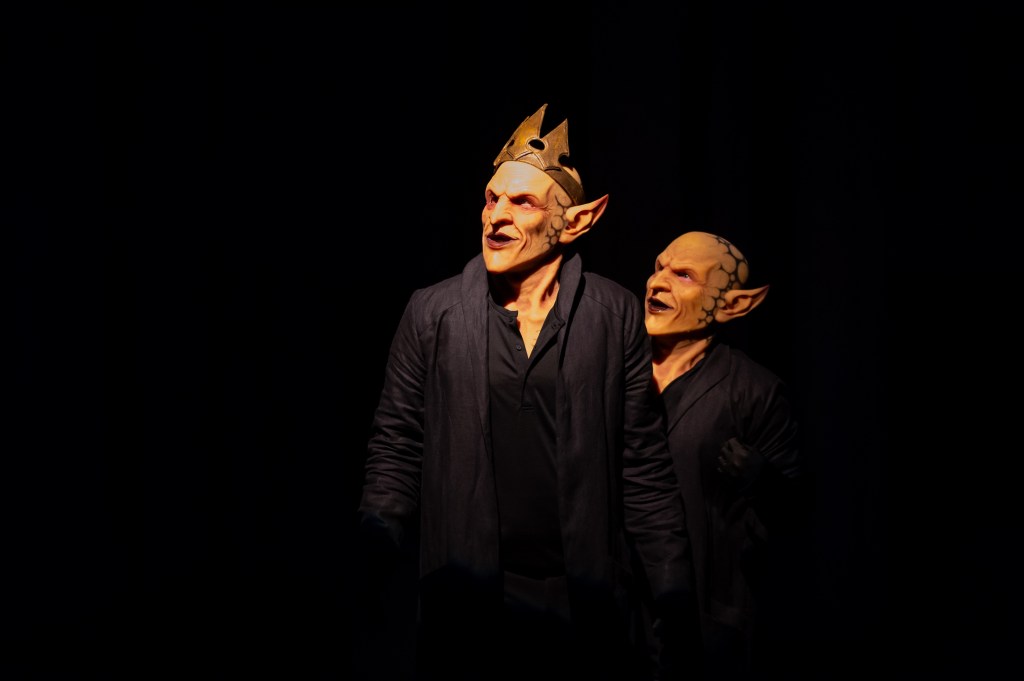
This spooky season, Royal Manitoba Theatre Centre’s Tom Hendry Warehouse is playing host to a trio of goblins (not the ones from Tolkien, as they are quick to correct audiences). The goblins are unfamiliar with our human customs about theatre etiquette, venue rentals, and how to treat assistant stage managers, but are eager to learn. Before the show begins, the trio are running around the stage looking like the first act of 2001: A Space Odyssey as they explore the set pieces and props they have to work with.
What unfolds next is pretty much exactly what it says on the tin: three goblins perform the classic tragedy Macbeth after discovering the complete works of Shakespeare. Naturally, they chose Macbeth because it features the most murder (although Goblin: Titus Andronicus would have worked just as well.) The Weird Sisters provide the fateful prophecy that spurs our leading man into a murderous rampage, cheered on by his ambitious wife to eventually become King of Scotland. The goblins recruit members of the audience throughout to help them tell the tale, including some truly delightful crowd work to figure out what the heck is meant by “Birnam Wood coming to Dunsinane.”
The play features live sound and accompaniment by goblin Moog, stars Wug as our titular king, and Kragva as everyone else. If you’re wondering about the actors behind the goblins, too bad; the program is very clear that these are actual goblins performing, not actors in extremely impressive prosthetics. Composite Effects does an incredible job of imbuing each goblin with their own personality while still allowing them to speak clearly and emote. As a fan of both Buffy the Vampire Slayer and the reality competition show Face Off, I was both totally on board with the conceit and also longing for a closer look to admire the artistry.
Some basic knowledge of the source material might prove helpful going in, as for every fourth-wall break or modern-English translation of a classic scene, there is still the core of Shakespeare’s original text being performed by only three actors. That said, Kragva does some great heavy-lifting as the entire ensemble cast of Dunsinane’s court, including a southern Banquo, a nepo-baby Malcolm, and Macduff by way of Shrek. Even with chastising the audience for “lying” about their familiarity with the Scottish play, the goblins only held our hands so much to make sure we were keeping up. The especially game nature of Thursday’s audience could largely be attributed to a house full of theatre community members who know the beats of the play by heart.
To say this play is not quite what Will had in mind some four-hundred years ago would be an understatement, but that doesn’t mean it’s not what he would have wanted. The energy on opening night was electric as audiences played their roles with enthusiasm, laughing at the goblins’ antics and supplying whatever was asked of them. It was one of the most exciting theatrical experiences I’ve had at the Warehouse in a while, as an entire audience was locked in to playing along with our goblin hosts (minus one grump sitting house left with his arms crossed.) Folks were worshipped as witches, offered military strategy, let loose the trumpets of war, and in the case of the patron in this reviewer’s row, got respectfully shushed when the time had passed for audience interaction. The play does invite the rowdiest amongst us perhaps too much free reign for call-and-response; trust the goblins, they will tell you when it’s your turn.
But more magic than any prophecy is watching an audience of two hundred people ‘yes, and’ the goblins into re-enacting the final battle for the crown. The heart of the show is exploring how that connection with a live audience is what makes theatre powerful – so powerful that three bloodthirsty goblins would take a stab at it, giving new life to a show crafted in the seventeenth century.
********************************
Daphne Finlayson (she/her) is a director and creator based in Winnipeg. She is a graduate of the University of Manitoba with a BA in Theatre and Film Studies. In 2022, she graduated with honours from the inaugural Red River College Digital Film and Media Production program. She has worked with companies like Royal Manitoba Theatre Centre, Prairie Theatre Exchange, The Village Conservatory for Music Theatre, The Keep Theatre, Theatre Projects Manitoba, and Rainbow Stage, in addition to running her own company, Hypothetical Projects. Daphne was the recipient of the inaugural Dan Augusta Promise Prize from Sick + Twisted Theatre and received the Gladys Cameron Watt Award in the 84th National One-Act Playwriting Competition.


Leave a Reply