• *****Cet été que chante is a play performed in French at Théâtre Cercle Molière. Anglophones who want to see it can make use of the subtitling tablets available for free. This review is in English to persuade anglophones that this is worth doing. French theatre is meeting you half way – it’s up to you to just show up******

    In a rough sense, this show explores a summer francomanitoban writer Gabrielle Roy spent at a cabin in Québec. This description, while accurate, doesn’t capture the nature of this show. If many plays come across as movie-like or acted out novels, this one is poetry: sensory, engaging, and appealing to the emotions over the calculating brain. If you can let yourself enter this world, you are in for a treat – escapism in the best sense of the word, as in takes you to a place outside of yourself. Is it pretentious if I say it’s as much a theatrical experience as a play? I apologize. It may still be true.

    It’s also possibly one of the best plays to see if you are depending on the subtitling tablets. Texts are not the primary element, and you can definitely appreciate a lot of the show without needing to follow words. When the text matters, you have time to really feel the words in your body.

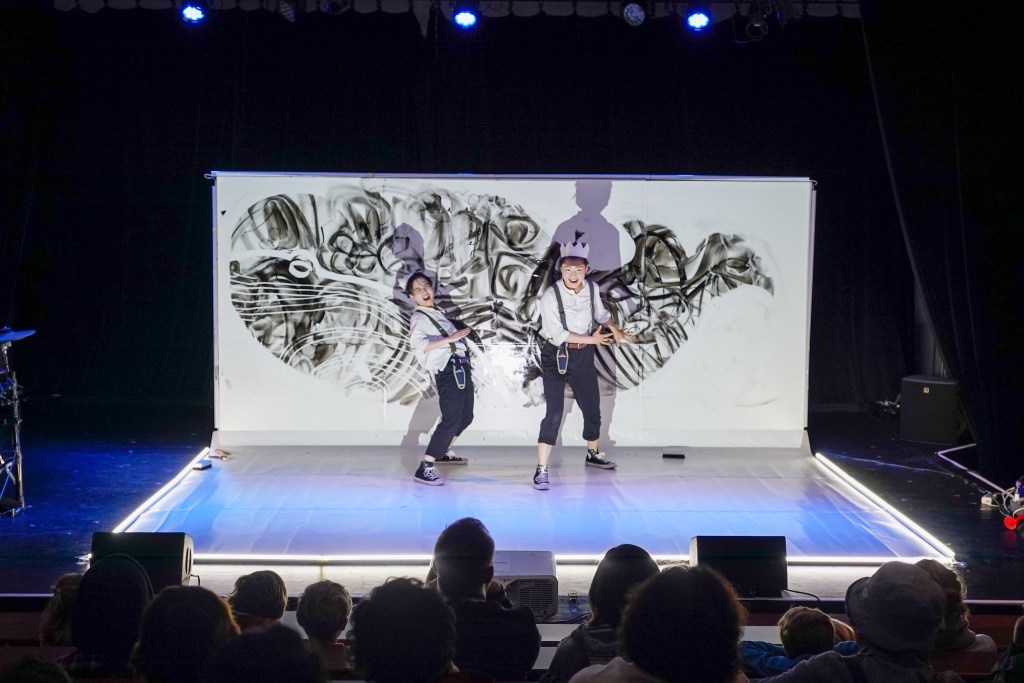
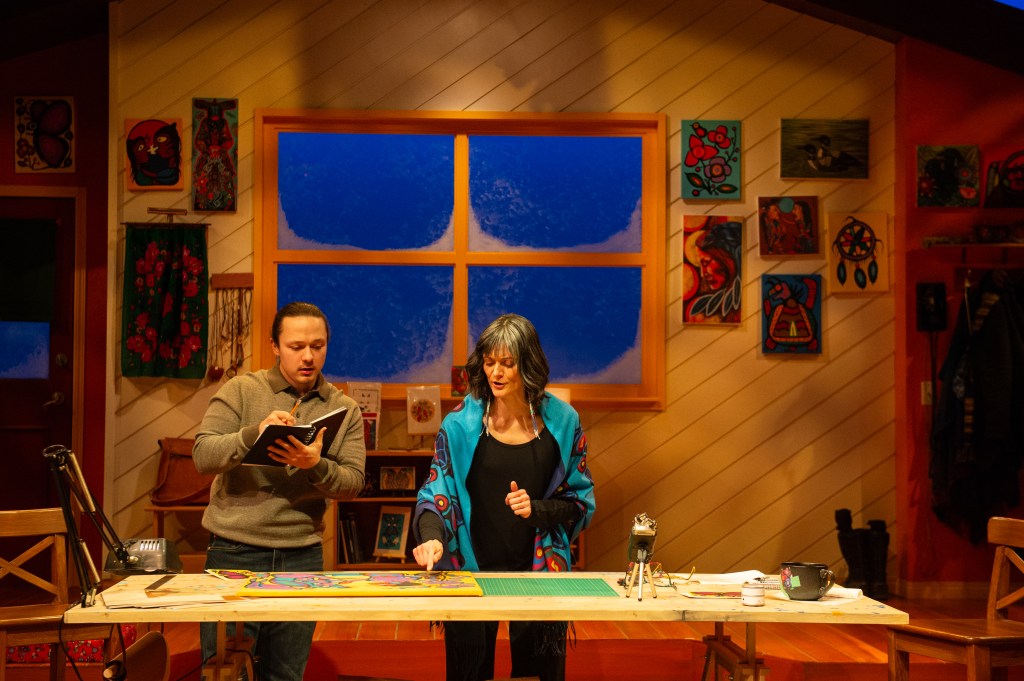
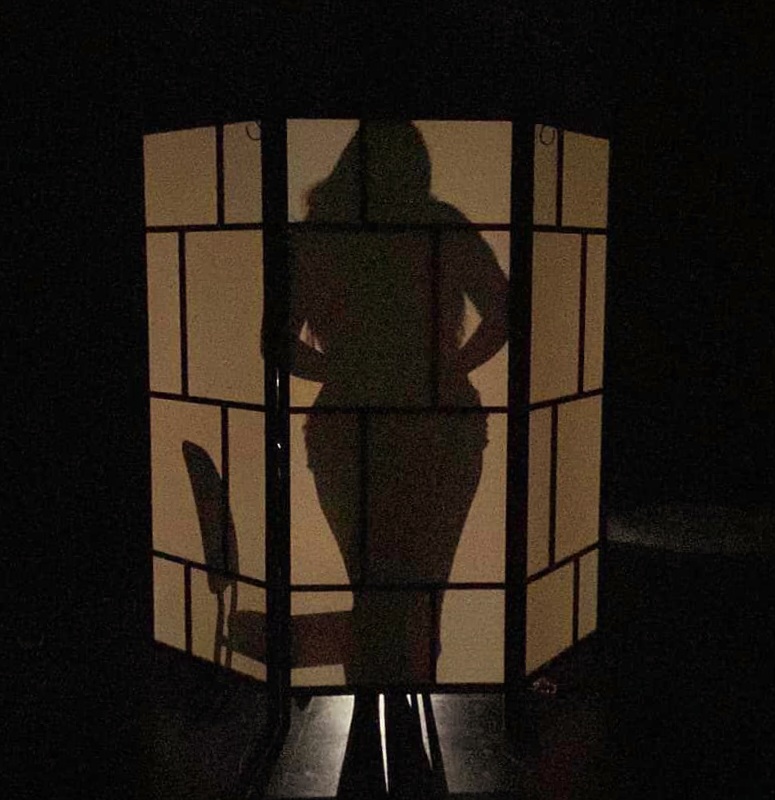
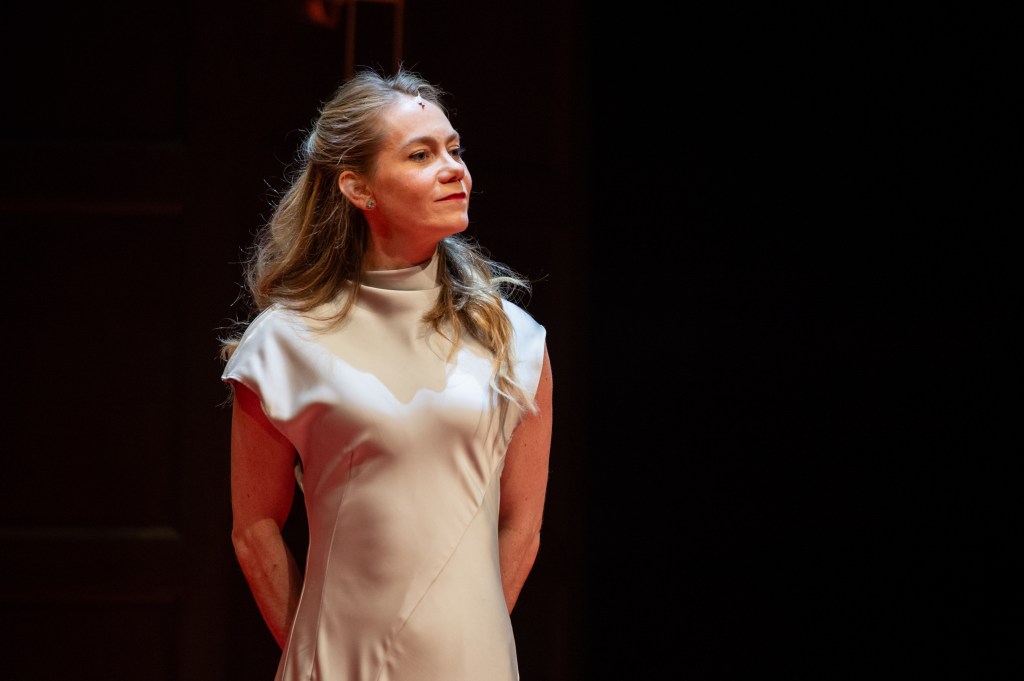
    The storytelling in this piece is highly multimedia. If you can put aside any need for the suspense of a linear plot, it is well worth it for the experience. The show opens gently, slowly with the rituals of bringing in a suitcase and setting up the cottage. From there, the show explores the imagination of the writer at this one point in time. On one hand you have the figure of Gabrielle Roy, inhabiting this cabin space over the summer, sometimes writing and sometimes just experiencing. Then you also have the use of some really exquisite transparencies, handled artfully to show nature in motion. To be totally honest, I would have watched an hour of those drawings out the window without further plot. There is also puppetry both simple and complex, from simple moving parts to a full doll representing her sister. Finally, there are scenes of Gabrielle interacting with her neighbour, fully immersed in a world more active and less contemplative than that she describes. The result is both sensual and meditative, an opportunity to spend time a place of deep creativity.

    The result is that you have a show which manages to capture a way of looking at the world, a perspective. This becomes the tension that draws us through to the end: what did Gabrielle Roy see that summer that made this time so exceptional? It honours creativity and the space to see the world in a new light, however that manifests.

    My overwhelming impression of this piece is that it is beautifully crafted. Craftsmanship, to me, means that it has good bones – is put together well in a way which needs to be respected for an objective point of you. Whether or not you like this show, (and I did), you have to admire the expertise it displays. Every element is well considered, from costumes, to stage display, to each moving part. Nobody makes anything like this without really putting in the time to develop their craft. This is a show that blurs the line between visual art and theatre. Any scene could easily be frozen to offer a tableau rich with narrative.

    In watching Cet été qui chante, literally “this summer that sang”, I wanted to invite every fringe performer I’ve ever met to learn from this show. I want them to learn how to have fun with materials, how to play with different art mediums, and above all to blend these storytelling techniques into their own multisensory performances. This is experimenting to find a theatrical voice. This is a unique take on performance which needs to be learned from.

    Beautiful. Deliberate. Poetic. If you love theatre, you don’t have to like this show in order to benefit from seeing it.

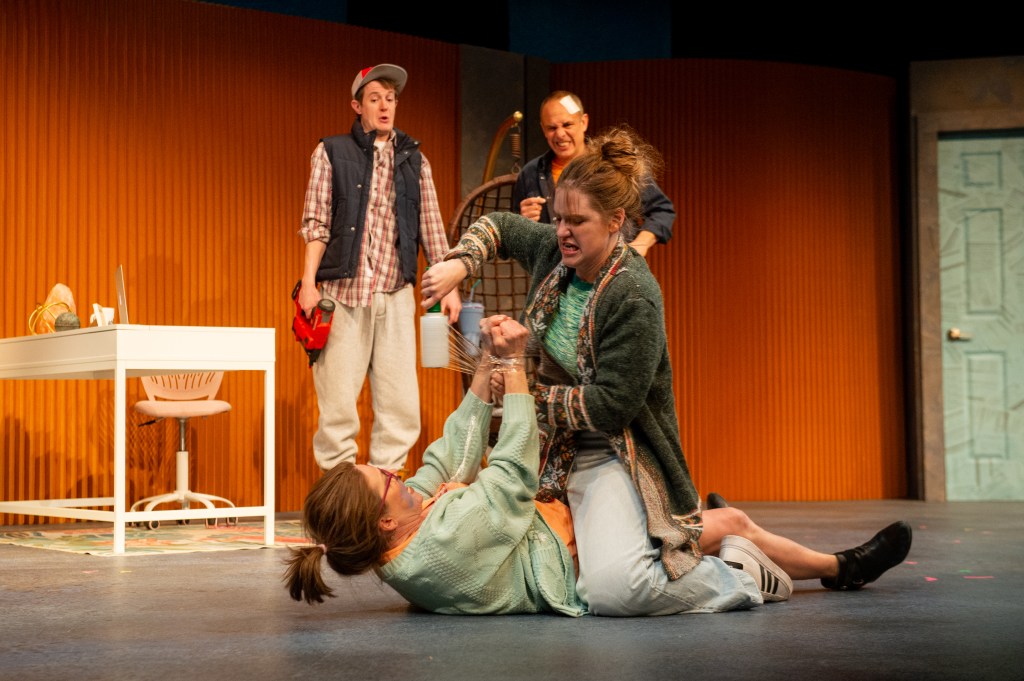
  • A sequined dame hitting on someone in the crowd with terrible puns. A panto pony dressed as a goose. Coming across a new health supplements – sorry, beans – salesman on a wheelchair ramp that also brings the action to the crowd. Yelling and booing and doing call backs. These are what made my first experience of panto last night. Can I speak to the pantomine tropes? Nope. Can I compare it to other versions? Nope. Does it matter? Nope, this show is way too fun to get stuck on trivialities like that.

    I can tell you the plot of the show fairly simple, based as it is on well known fairytales: Jax and his mother are starving because the ruler of the sky kingdom is hoarding all the resources. Jax then sells their… cow… for beans, which grown into a beanstalk… you get the drift. Along the way, the emperor-ruler-president gets fitted for new clothes, people sing, and much fun is had by all. At the end of the day, the plot is not really what makes this show. It’s those visceral experiences and the interactivity of it all. I mean, when you get down to it, this is just another well performed, super campy, interactive show with multiple layers of meaning and scathing political commentary. Only that.

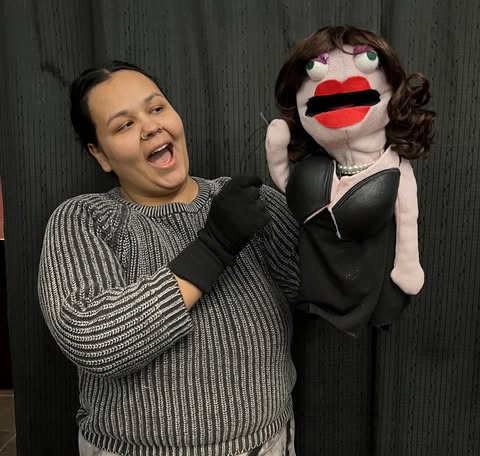
    I’ve already talked about how this theatre company is accessible in one sense of the word, in that it accommodates actors with disabilities. Seeing it in person I was struck by how accessible it was in the other sense of the word: easy to people to appreciate, understandable, maybe even welcoming. Artistic director Debbie Patterson explained that the muppets were one of the main inspirations for the show, their cuddly rainbow soft demeanour hiding some pretty hard jabs in the direction of restrictive social norms. Some of my favourite moments in the show were when the performers brought attention to their own minority status, such as non-binary gender or lack of a hand. My personal favourite was when the actor who is signing accuses the audience of being illiterate because they can’t speak with their hands, but instead use their mouths with gross saliva. It was such a quick, clever, but meaningful moment that worked really well as a political statement. A mentor of mine used to say that realism inherently favours the powerful because the current world is as they made it; this show’s gentle inclusion of diversity is a wonderful example of using the absurd to bring attention to people’s real life experiences. It was lovely

    This show is warm and inclusive in that it brings the audience in with it to revel in its terrible puns, glittery props and redone song numbers. I felt great joy in the panto-pony’s “costume changes”. Kids would absolutely love the theatricality of it all. Which gives plausible deniability to people who don’t want to see the commentary on water use, ICE detention centers and, well, basically the rest of the play. They can bathe in fun and music, but also, why would you want to stay there? There is so much more commentary worked in.

    The performances in this piece stand out. It is exceptionally engaging. Where I felt that there was room to rework the script was with the real world parallels. Like all satire, this show relies on the audience already having a certain amount of knowledge about the real world that makes the subversion funny. Some of it hit the nail on the head, no questions asked. For example, the Emperor-president-supreme ruler character is just right without needing much finessing. The “new age supplement” beans had me in stitches, since I like most disabled people have faced my fair share of people who believe it’s possible for me to treat my medical condition with some variation of kale smoothies, yoga and meditation…(If this is you I am not sorry and I do not apologize). On the other hand, the digital workers aesthetically clashed with the rest of the show and weren’t well developed as characters. It made sense to have the people of the Sky Kingdom be present in some way, but for me there wasn’t enough drawing out the metaphor of digital work to make it effective. I wanted less political real world parallels, not because they weren’t important, but because I wanted what there was to be drawn out more.

    On the other hand, I got unapologetically teary eyed when at the end the message was that it takes a community to tear down facism. What an amazing reversal of the usual fairy tale individualism where one lone rugged individual magically fixes everything. Yuck. Believing any one person should have that kind of power for any reason is what results in those Emperor-president-supreme ruler characters being able to mess things up in the first place.

    Also, this is my blog, so let me just say that absurdist campy leftist shows will always be given a warm welcome on my page.

    Dear Winnipegers:

    I think this panto show should become your holiday tradition. It has the local references you love, the silliness you pretend you don’t need, and the scathing political commentary that works because it’s funny.

    This will only get better with more people invested, more participation and more energy. And it’s already really good. I can’t wait to see what they do next. Just so you know, I am definitely a fan.

    XOXO Daniela Smith-Fernandez

  • Today was media call for Sick and Twisted theatre’s Merry Crip-Mas Panto at the WECC. The amazing thing about doing theatre criticism is that you can actually go to an event like this and ask questions – because that is what you are supposed to do. With that in mind, the lovely folks at the show were generous enough to share their time and perspectives. Which was more than enough to discover that what they are doing is special in a way that goes far beyond the show they are producing.

    Which you should still check out. It looks like it will be funny and out there and amazing. Reviews to come.

    What is really remarkable about Sick and Twisted is the way they go about producing shows. According to their own mandate, they make art that “celebrates the vibrancy and impact of inclusive theatre performance”. Inclusive theatre performance in part means using a cast who live with disabilities of some variety. In the conventional narratives that we’re told about disability, that would be the end of the story. I can just see the well meaning commentators saying “Look! Isn’t it so inspirational for people with disabilities to make art?” As though the point was the disability, and any attention given to them an act of charity. That kind of thinking is patronizing, reductive, and (I can not stress this enough) not what this theatre troupe does.

    So why does this marginal position matter?

    Because these are people who do quality, edgy and interesting work. Who aren’t always able to do it because of accommodation issues.

    And if, like me, you were blown away by the caliber of performances Sick and Twisted offers… maybe like me you end up also feeling mad at all the systematic issues that get in the way of seeing these actors on stage more often? Because I’m furious. I’m reminded of Metachroma Theatre in Montreal, whose production of Richard III I reviewed back in 2012. This was a company of actors of colour who wanted to put on shows where their skin colour didn’t impact the roles they got to play. It remains possibly the best Shakespearean play I’ve ever seen. Inclusion isn’t important just because it’s the human thing to do; it also makes for better art.

    It also shapes the way the work gets made in a meaningful way. Founder and Artistic Director Debbie Patterson described how they spend time as a company establishing everybody’s accessibility needs before rehearsals even start. Every single person I spoke to made a point of mentioning how supported this made them feel. In my experience, that’s something quite rare to find in any workplace, but especially in the arts where there is all too often the attitude that when you love your work you shouldn’t be distracted by such trivial matters as health, support or even just simple accommodations as needing to eat and pay rent regularly.

    Due to being in a supportive environment that is accommodating, the cast can just focus on putting on a subversive show. That subversive edge is also informed from the minority perspective.

    “Living with disability, whether it is mobility or chronic pain, or mental or physical, and all of us in this show are living with disability,” says Theresa Thomson, “there’s a darkness that comes with that, and there’s inherently a choice where you can choose to laugh, or you can let the darkness take you. “

    Tomorrow I will be reviewing a play, something I’ve done dozens of times in the past. Today I am in awe of the camaraderie and healthy working habits of a group – and that respect will be there regardless of what I think of it.

    They have also inspired me to approach this blog in an accessible way. I am also someone who lives with disabilities, and these have often interfered with my ability to do things in a hundred ways, both big and small. At this point I’m starting a theatre blog with confidence that I can do the work required, but there have been many points where that wasn’t possible. Things might come up in the future.

    Inspired by Sick and Twisted theatre, I am going to promise to deliver this blog as often and as well as human resources allow. I would love to do extra articles. I want to have bilingual written content. That might not always happen. At the same time, not doing this project because it might not be perfect makes no sense. There is a place for multiple voices.

    Now for the show!

  • Mon premier émission sur la radio Envol avec Caroline Touchette. À propos d’Outside Joke improv troupe à Prairie Theatre Exchange.

    #improv #radioenvol #outsidejoke #prairietheatreexchange

  • So what is this site and why did I decided it needed to exist?

    Well, this is a site to talk about theatre. All kinds of theatre. Performances of many stripes. All the small and ridiculous, grandiose and elaborate that happens in the middle of the continent. Quite simply, a blog for theatre lovers by theatre lovers. The only limit is that it has to happen in Winnipeg.

    Beyond that, no real limits. English. French. Fringe. Mainstage. Anything else that comes along. There’s a lot of cool stuff that goes on in this town, and all too often the most interesting gets stuck in the cracks of media attention.

    “Review” and “Criticism” both have bad reputations, so it’s worth explaining what they mean here. I believe that there is value in good criticism, by which I mean having conversations about art. Commentary. Observations. Connections made to other ideas and works. In other words, it has to be constructive to be worth it. Good criticism is not ripping the creator and-or artists to shreds to prove that you have taste so sophisticated that you’ll never be able to enjoy art in this life time. If this is you, go be miserable somewhere else. I love theatre and I have every intention of continuing to love theatre for the rest of my life. We want to contribute to conversations. Because that’s what good art does is creates conversations.

    I am right now one person, and so there may be limits to what I can cover. Ideally, I’d eventually have a team that could coordinate reviews for Fringe. We’ll have to see.

    At any rate, curtains up. There are going to be some pretty great shows ahead.